HR Compliance Best Practices
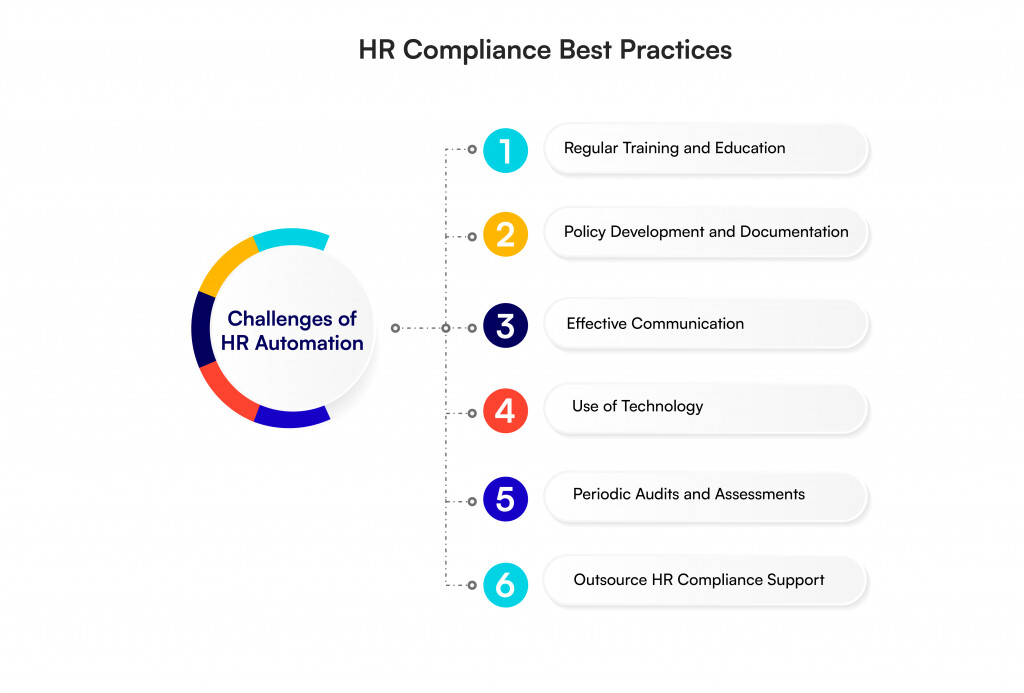
Ensuring HR compliance requires more than just understanding the laws and regulations. It involves proactive measures to keep your organization compliant, minimize risks, and foster a positive work environment. Here are some best practices to achieve effective HR compliance:
1. Regular Training and Education
Continuous training and education are vital for maintaining compliance. Employees and managers should be regularly updated on the latest laws and company policies.
Training programs should cover areas such as anti-discrimination, harassment prevention, workplace safety, and legal updates. This not only helps in compliance but also ensures that employees understand their rights and responsibilities.
2. Policy Development and Documentation
Develop clear and comprehensive policies that align with legal requirements and best practices. These policies should be documented and easily accessible to all employees.
Regularly review and update policies to reflect any changes in laws or company practices. Ensure that all employees are aware of these policies and know how to report violations.
3. Effective Communication
Effective communication is essential for a compliant workplace. Keep employees informed about company policies, legal requirements, and any changes that may affect them.
Use various communication and collaboration channels such as emails, meetings, and intranet portals to ensure that the information reaches everyone. Encourage open dialogue and provide a safe environment for employees to voice concerns and report issues.
4. Use of Technology
Leverage technology to streamline HR processes and ensure compliance. [HR management systems (HRMS) can automate tasks such as payroll processing, record-keeping, and benefits administration.
These systems can also provide alerts for compliance deadlines and generate reports for audits. Using technology reduces the risk of human error and ensures that compliance tasks are handled efficiently.
5. Periodic Audits and Assessments
Conduct regular audits and assessments to ensure compliance with laws and company policies. These audits can help identify potential issues before they become major problems.
Review processes such as payroll, employee classifications, and record-keeping to ensure they meet legal standards. Address any discrepancies promptly and update practices as needed to maintain compliance.
6. Outsource HR Compliance Support
Consider outsourcing HR compliance tasks to experts. HR compliance service providers can offer specialized knowledge and resources to help manage complex compliance requirements.
Outsourcing can be particularly beneficial for small and medium-sized businesses that may not have the in-house expertise to handle all compliance issues. This allows your organization to focus on core business activities while ensuring compliance.